

Field Trip 5
Geoscience for the Energy Transition: Insights into Three Institutions in the GEOZENTRUM Hannover
Description
The campus Geozentrum Hannover is shared by the three institutions Federal Institute for Geosciences and Natural Resources (BGR), LIAG Institute for Applied Geophysics (LIAG) and State Authority for Mining, Energy and Geology (LBEG). The excursion will highlight activities at the Geozentrum by introducing the participants to available facilities for field research and in laboratories for investigation of the subsurface or important processes that shape it. The tour therefore begins by introducing accessible data platforms for subsurface data and their various applications before leading participants through geochemical, geomicrobial and petrophysical research laboratories focusing on hydrogen storage. Further stations showcase field-deployable geophysical systems and present new developments in 3D visualisation of the subsurface.
Stations at GEOZENTRUM Hannover
NIBIS3D & Geothermal energy
(LBEG, Gr. Sitzungssaal)
The 3D portal NIBIS3D serves as the central platform for publishing all 3D models developed by LBEG, including both surface-based and volumetric models. At this station, visitors can explore the capabilities of NIBIS3D and gain insight into how modern 3D geological information systems support the visualization, interpretation, and communication of subsurface data. Similar platforms are currently in use, or are being developed, in almost every German federal state, highlighting their importance as a standard tool for the presentation and analysis of geological information.
In addition to NIBIS3D, LBEG provides a range of digital applications that make geological information accessible to different user groups. One example is the application “Geothermal energy – does it work for me?”
For homeowners considering replacing an old heating system or building a new home, a key question is whether geothermal heating is a suitable option. The application is aimed at interested parties who are thinking about geothermal heating for their own home (heating capacity up to max. 30 kW). It is intended to provide a first orientation of the site with regard to the expected legal conditions of use and the geothermal performance of the underground. This application is only one of the digital tools the LBEG provides about geothermal energy.
Experiments to assess biogeochemical risks for subsurface H2 storage
(BGR, Rooms D316, D324, D16)
To enable large scale subsurface hydrogen storage, risk assessment of different storage options in different formations is crucial. Here we show the experimental approaches used in the BGR project BiMiAb_H2 in several labs to quantify rates of microbial or geochemical hydrogen oxidation reactions under in situ conditions in reactors and in microfluidic systems. In addition, we show the avenues to study the effects of hydrogen on petrophysical properties of reservoir or cap rocks.
Making georeservoirs visible with geophysics
(LIAG, Parking Lot)
At the LIAG station, we demonstrate why geophysical exploration is essential for reliably characterizing, modelling, and operating georeservoirs for the global energy transition. Geophysics provides the evidence-based measurement foundation from which robust subsurface models are built. We will showcase innovative drone-borne electromagnetics, further developed at LIAG for detecting raw materials and groundwater systems, as well as our borehole logging truck that records subsurface properties down to depths of around six kilometres. This illustrates how combining spatially continuous surveys with site-specific measurements leads to a consistent subsurface picture.
Visualising the subsurface
(BGR, Lager- und Versuchshalle)
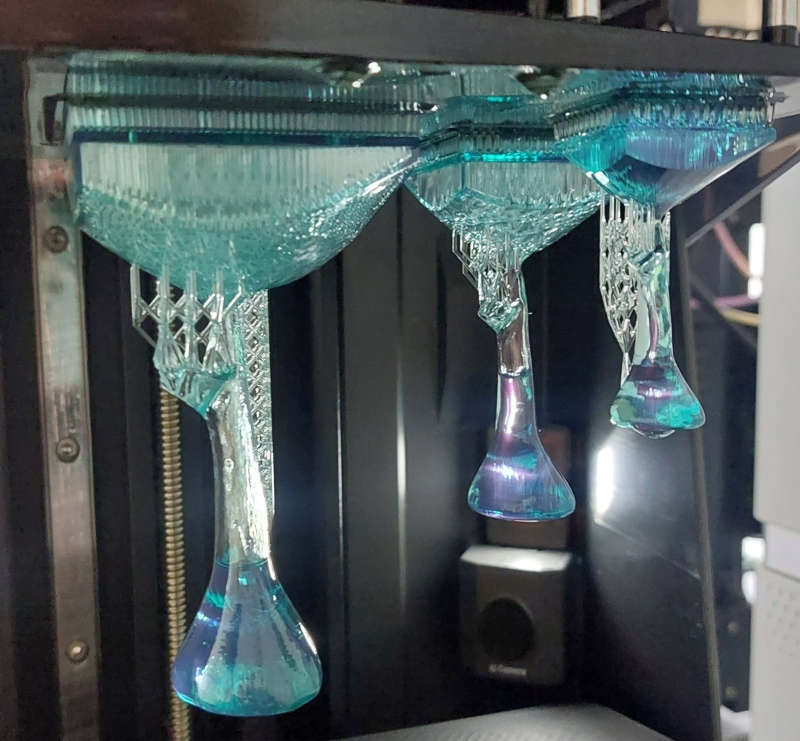
To communicate the complex content of our geological 3D models in the context of subsurface uses — such as CCS, geological disposal, geothermal energy and other applications — to different target audiences, we use a range of visualization techniques, including VR and 3D printing. As part of this workshop, we would like to offer you the opportunity to visit our “printing lab”. We will demonstrate how 3D models are prepared for printing, show the printing process itself, and introduce potential post-processing techniques. Additionally, we will offer you the opportunity to interactively explore our 3D-Models in Virtual Reality. You can “walk” on different stratigraphic horizons and explore the towering salt structures in the German North Sea.
Fieldtrip Leaders
- Ruediger Biedorf
Manager Testing Drilling Services at Baker Hughes
Health and Safety Requirements
High heels and open-toe shoes should not be worn during the field trip. Health and safety instructions will be provided onsite, along with the necessary protective equipment.
Important information
Transportation: individual (recommendation: train)
Meeting point: Main Building, GEOZENTRUM Hannover, Stilleweg 2, 30655 Hannover
Fieldtrip Leaders
- Ruediger Biedorf
Manager Testing Drilling Services at Baker Hughes
Date
6 November 2026

Time
08:45-13:30

Meeting point
GEOZENTRUM Hannover
Field Trip Schedule
| Time | Activity |
|---|---|
| 00:00 | Lorem ipsum dolor sit amet, consectetur adipiscing elit. |
| 00:00 | Lorem ipsum dolor sit amet, consectetur adipiscing elit. |
| 00:00 | Lorem ipsum dolor sit amet, consectetur adipiscing elit. |
| 00:00 | Lorem ipsum dolor sit amet, consectetur adipiscing elit. |
| 00:00 | Lorem ipsum dolor sit amet, consectetur adipiscing elit. |
| 00:00 | Lorem ipsum dolor sit amet, consectetur adipiscing elit. |
| 00:00 | Lorem ipsum dolor sit amet, consectetur adipiscing elit. |
| 00:00 | Lorem ipsum dolor sit amet, consectetur adipiscing elit. |
| 00:00 | Lorem ipsum dolor sit amet, consectetur adipiscing elit. |
Register now