Short Courses
Get inspired
And broaden your horizon
The EAGE GET2026 offers one-day short courses by carefully selected renowned instructors, aimed at providing professionals and academics with key knowledge relevant to current developments in the field.
Short courses are listed below
Short course 1 – 2 November
The Digital Twins Enabling CCS and the Energy Transition
Digital technologies are transforming how CCUS projects are planned, operated, and monitored. This course introduces core concepts—Digital Twins, Machine Learning, and AI—before exploring real examples such as CO₂ compressor and pipeline twins, real‑time reservoir models, and plume‑tracking surrogate models. Participants will also see how Generative and agentic AI support activities from drilling to injection. By connecting planning, modelling, and monitoring, the course shows how digital tools improve efficiency, safety, and decision‑making—equipping students and professionals with essential skills for the future of low‑carbon engineering.

Short course 2 – 2 November
Exploitation and Commercialization Potential of Natural Hydrogen
“Natural” or “Geological” Hydrogen is highlighted as a potential lowcost alternative source for the Energy Transition. Research suggesting substantial but highly speculative Exploration Potential has received prominent Media Attention Existing seminars and papers on natural hydrogen typically focus on the exploration aspects, especially the understanding of hydrogen source-mechanisms and generation rates in the subsurface. However, to assign a commercial value to natural hydrogen exploration potential, one needs to start considering what possible exploitation projects might look like and what challenges (technical, commercial, environmental) these may face.

Si Fiction: Offshore Wind Development for geoscientists, from Site Investigations to Wind Farm Design
This one‑day interactive course provides geoscientists with a practical, end‑to‑end introduction to offshore wind farm development. Participants follow the full project lifecycle, from early project framing and site investigations to concept design, using a realistic case study. Combining concise lectures with team‑based assignments, the course immerses participants in real project decision-making. Through a “boardgame” simulation, teams define project goals, plan a site investigation (SI) campaign, interpret SI results, and design a fit‑for‑purpose offshore wind farm layout. This hands‑on format mirrors the multidisciplinary collaboration typical of offshore wind projects and demonstrates how geoscience influences engineering decisions, cost drivers, risks, and overall project feasibility.

Short course 4 – 6 November
Resource-Assessment of Geothermal Systems with Emphasis on Low to Medium-Enthalpy
This course provides participants with an understanding how the ranges in extractable Heat Resources for a geothermal project can be estimated and reported in a manner compliant with industry best practices (e.g., UNFC), what the key uncertainties are and how the required data can be obtained. As the value of a geothermal asset and its commercial exploitation potential are intrinsically linked to the quantities of Heat Resource extractable from a successful project, assessment of the Heat-Resource range is critical to determine asset value and high-grade those assets and projects that have the highest chance of commercial success.

Short course 5 – 6 November
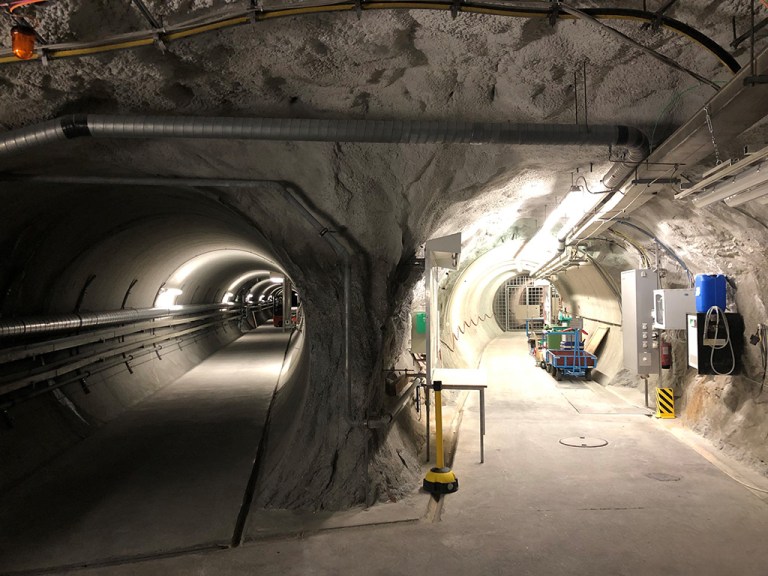
Structural Geology and Geomechanics in Nuclear Waste Management
Structural geology and geomechanics play a central role in the safe and sustainable management of nuclear waste, particularly where long-term mechanical stability and geological integrity must be ensured over timescales of thousands to millions of years.
The course begins by outlining the broader context of nuclear waste management and the rationale for geological disposal as the preferred long-term solution for high-level and long-lived radioactive waste. Key repository principles such as isolation, containment, and the use of engineered and natural barriers are introduced. Within this framework, structural geology is presented as a critical discipline, as faults, fractures, folds, and other deformation features directly influence rock strength, permeability, and long-term stability.
Short course 6 – 2 November
Geomechanics for Successful Geothermal Developments: From Site Characterization to Long-Term Reservoir Performance
Understanding the mechanical behaviour and operational limits of the subsurface is fundamental to safe, efficient and sustainable geothermal energy developments. This course explains how geomechanics supports engineering decisions throughout the geothermal project lifecycle, from site characterization to long-term reservoir management. Through geomechanical principles, multiphysics measurements, subsurface characterization, numerical modelling and practical case studies, participants will learn to anticipate operational risks, optimize reservoir performance and develop mitigation strategies that improve safety, efficiency and asset longevity.
Access all events, including Short Courses, Field Trips, and Workshops.